No products in the cart.
Introduction
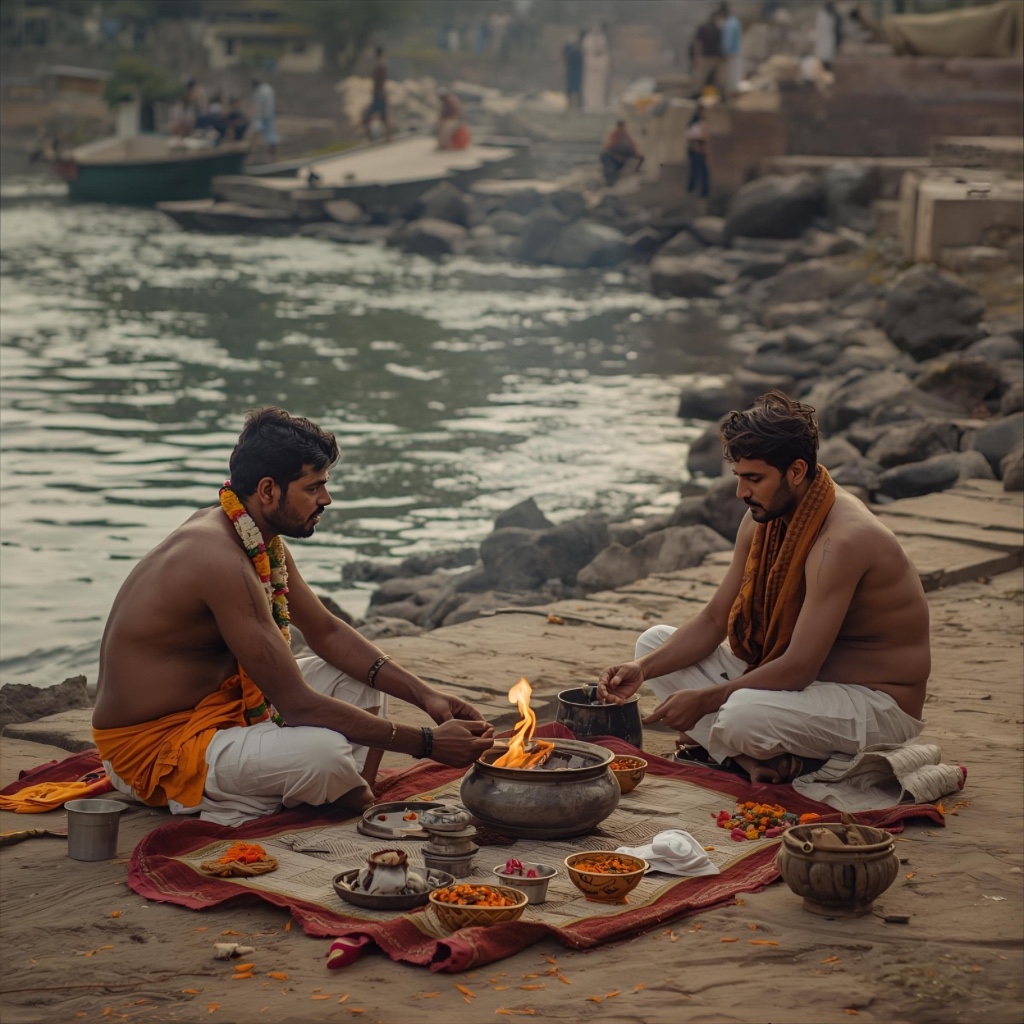
In Hindu tradition, Pitru Paksha, also called Shraddh Paksha, holds immense spiritual and cultural value. It is a 16-day period dedicated to paying homage to one’s forefathers and ancestors, a time when families express their gratitude through rituals and offerings. The very essence of Pitru Paksha lies in the belief that our lives are deeply connected with the blessings of those who came before us, and by honoring them, we maintain the eternal cycle of love, respect, and duty.
This sacred observance falls during the Krishna Paksha (waning moon fortnight) of the Hindu lunar month of Bhadrapada (around September–October). During this fortnight, Hindus perform Shraddh, Pinda Daan, and Tarpan rituals to seek blessings and ensure peace for their ancestors’ souls.
Meaning of Pitru Paksha
The word ‘Pitru’ means ancestors, and ‘Paksha’ means fortnight, thus Pitru Paksha literally translates to “the fortnight of the ancestors.” It is believed that during these 16 days, the souls of the departed leave their realm and descend to Earth to visit their descendants. By performing specific rituals, devotees not only honor their Pitrs but also fulfill their spiritual obligation known as Pitru Rina (debt of the ancestors).
Hindu scriptures like the Garuda Purana and Manusmriti emphasize that a person is born with three types of debts – to the gods (Deva Rina), to the sages (Rishi Rina), and to the ancestors (Pitru Rina). Among these, Pitru Rina is fulfilled by performing Shraddh rituals during Pitru Paksha.
Why Pitru Paksha is Celebrated
The celebration of Pitru Paksha is deeply rooted in mythology and dharma. It is said that without offering Shraddh, the soul of a departed ancestor may wander unsatisfied, causing Pitru Dosha (ancestral imbalance) in the family.
The Mahabharata narrates a story of Karna, the son of Surya. After his death, Karna ascended to heaven where he was served gold and jewels instead of food. When he questioned this, he was told it was because he had donated wealth but never food to his ancestors. Filled with remorse, Karna prayed to Lord Indra, who allowed him to return to Earth for 16 days to offer food and water to his forefathers. These 16 days became known as Pitru Paksha, establishing the tradition of performing Shraddh to satisfy ancestral souls.
Importance of Pitru Paksha
Gratitude to Ancestors: Pitru Paksha is a way of expressing thankfulness for the life, culture, and traditions passed down through generations.
Spiritual Duty: Performing Shraddh is considered an obligatory duty (dharma) for every Hindu.
Ancestral Blessings: It is believed that when ancestors are pleased with Shraddh offerings, they bless their descendants with prosperity, health, and success.
Removing Pitru Dosha: Performing rituals during this time helps in removing obstacles caused by ancestral imbalances.
Liberation of Souls: Shraddh ensures peace and progress of the departed souls on their journey toward liberation (moksha).
Significance of Rituals Performed During Pitru Paksha
Pinda Daan: Offerings of rice balls, sesame seeds, and barley mixed with ghee are made, symbolizing nourishment for the souls.
Tarpan: Water mixed with black sesame seeds is offered while chanting mantras to please the ancestors.
Feeding Brahmins & Cows: Serving food to Brahmins, saints, and cows is believed to transfer merit to the ancestors.
Charity: Donating food, clothes, and essentials during Pitru Paksha is considered highly auspicious.
Each ritual carries symbolic meaning. Offering food satisfies the hunger of the departed souls, water quenches their thirst, and charity performed in their name earns blessings for the entire family.
Regional Observances of Pitru Paksha
Pitru Paksha is observed across India with regional variations:
Pitru Paksha and Modern Relevance
Even in today’s fast-paced life, Pitru Paksha holds great importance as it reconnects families with their roots. It emphasizes the values of gratitude, respect, and remembrance. Families gather to perform rituals, cook traditional foods, and donate in the name of their ancestors, ensuring the continuity of culture and spiritual connection.
Many believe that neglecting ancestral duties may result in Pitru Dosha, which can cause hurdles in marriage, finances, or health. Performing Shraddh during Pitru Paksha is believed to balance this energy and bring prosperity.
Do’s During Pitru Paksha
Don’ts During Pitru Paksha


Здравствуйте форумчане! клагенфурт Планируем с семьёй впервые посетить рождественские рынки в Вене. Больше всего беспокоит, как обрядить детей, чтобы им было уютно и тепло, и при этом не утомиться от прогулок в морозную погоду. У детей неодинаковые годы — младшей пару лет, а старшему уже лет восемь, поэтому стремимся составить маршрут, который был бы увлекателен и безопасен для каждого, а также продумать небольшие остановки для отдыха и развлечений. Нашёл для себя полезную подборку лайфхаков и расписаний, но буду рад за ваши личные лайфхаки: как удобно спланировать день, чтобы не было скучно и неуютно, и какие места лучше избегать с детьми. Благодарю заранее за помощь!
Best place for sports betting in my opinion. The odds are competitive and the community is awesome. Highly recommend idsobatbola
Love the variety of games available here. It keeps things exciting and the graphics are really crisp. I’m spending a lot of my free time on bdxx777 lately.
[5981]Crazy Time Official Login | সেরা ক্যাসিনো বোনাস ও বিকাশ পেমেন্ট,Crazy Time অফিশিয়াল লগইন করে সেরা বোনাস পান। অ্যাপ ডাউনলোড করে সহজেই স্লট গেমের নিয়ম জানুন এবং বিকাশ দিয়ে টাকা জমা করে খেলা শুরু করুন। visit: crazy time
[1574]bmw 1x login – slot online deposit touch n go malaysia,Sertai bmw 1x untuk akses casino live dealer malaysia yang lancar. Download bmw 1x APK sekarang dan pelajari cara main baccarat online dengan mudah. visit: bmw 1x
I am revisiting my seasonal analysis because olive undertones seem difficult for questionnaires. My hair is distinctly dark and my eyes are medium brown, so the overall contrast can look winter-like. However my skin has a green-gold cast that automated tools often interpret as warm. Vivid orange dominates my face while cool berry and deep teal are usually easier to wear. These color tests prompt me to consider whether I belong in a cool winter range or a softer neighboring season. olive skin tone seasonal palette provides a helpful comparison point but I do not want to force the result to match one chart. During a basic draping session would you compare pure white with cream before testing accent colors? Silver and gold are inconclusive so I need clues that work better for olive skin. I can photograph the same drapes and review whether shadows, redness, or eye definition change. Which shades provide the clearest distinction without relying on stereotypes about skin depth? Real comparisons from similar coloring would be especially useful. I care more about repeatable evidence than matching every traditional description perfectly. I appreciate any practical suggestions
The registration was a breeze and I started playing almost immediately. It is refreshing to find a site that values the users time. idsinar777
I’ve been looking for a reliable way to access my account and this site is definitely the smoothest. The interface is clean and the login process is super fast. Highly recommend checking out djarumgacorlogin for a better experience.
[8031]goalwin অ্যাকাউন্ট খুলুন | বিকাশ দিয়ে সেরা স্লট গেম খেলুন,goalwin অ্যাপ ডাউনলোড করে আজই শুরু করুন। বিকাশ দিয়ে অনলাইন ক্যাসিনো ডিপোজিট এবং লাইভ ক্যাসিনো খেলার নিয়ম জেনে অ্যাকাউন্ট ওপেন করুন। visit: goalwin
For a small podcast episode, I need music to sit underneath an introductory voice. The difficult part is judging the music while the narrator starts speaking. I would like to separate the balance of the mix from any texture in the source. A useful comparison seems to require a fixed narration track and matched music levels. The original export would stay in a separate file throughout the comparison. The narrator has a soft delivery, and the cue includes a sustained background layer. I would listen to the opening both on headphones and on a small speaker, noting whether individual words remain easy to follow at a comfortable volume. I came across suno fix while looking for possible approaches to this question. I have not made a processed comparison and do not know whether it would help. A quieter texture would not be useful if it weakened the entrance. How would you organise a brief listening comparison for this kind of overlap?